01 · Essential
Focused refinement
Discuss focused options for mild laxity or early changes in facial contour.
03 — Method
Dr. Ye considers cheek support, the position of the lower face and jawline definition during an in-person assessment.
The framework
Dr. Ye evaluates changes in facial contour together with your anatomy, priorities and medical history.
At the consultation, discuss which changes you hope to address, what may be achievable and how recovery could affect your plans.

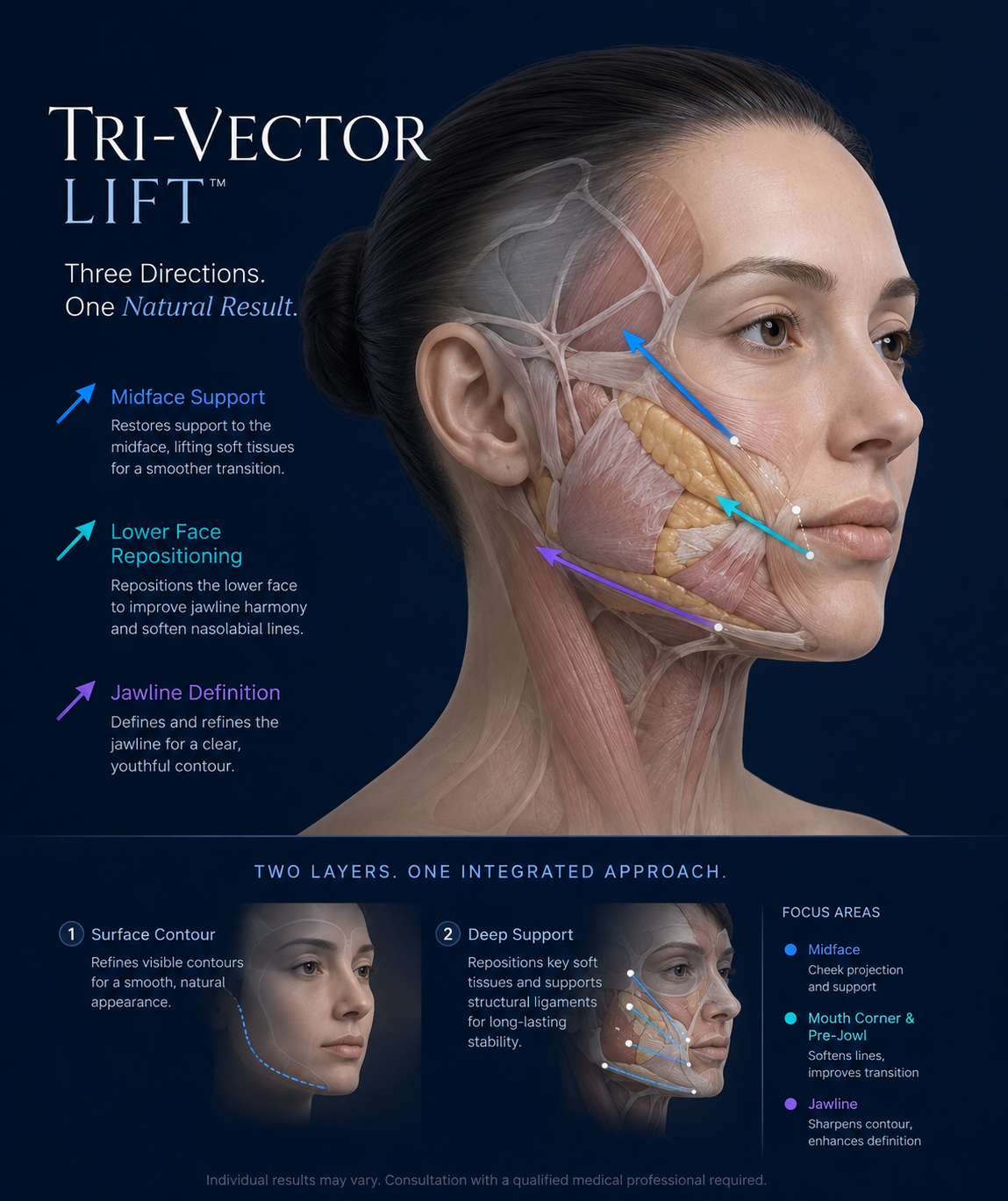
Three vectors
Each vector describes a direction of change discussed during assessment. They are considered together — not as separate procedures.
Looks at cheek support and the transition from the lower eyelid to the cheek.
Considers how lower-cheek position affects the overall facial contour.
Considers the outline of the lower jaw and how it relates to the rest of the face.
Treatment planning
These levels are not packages or rankings — they describe different degrees of structural need.
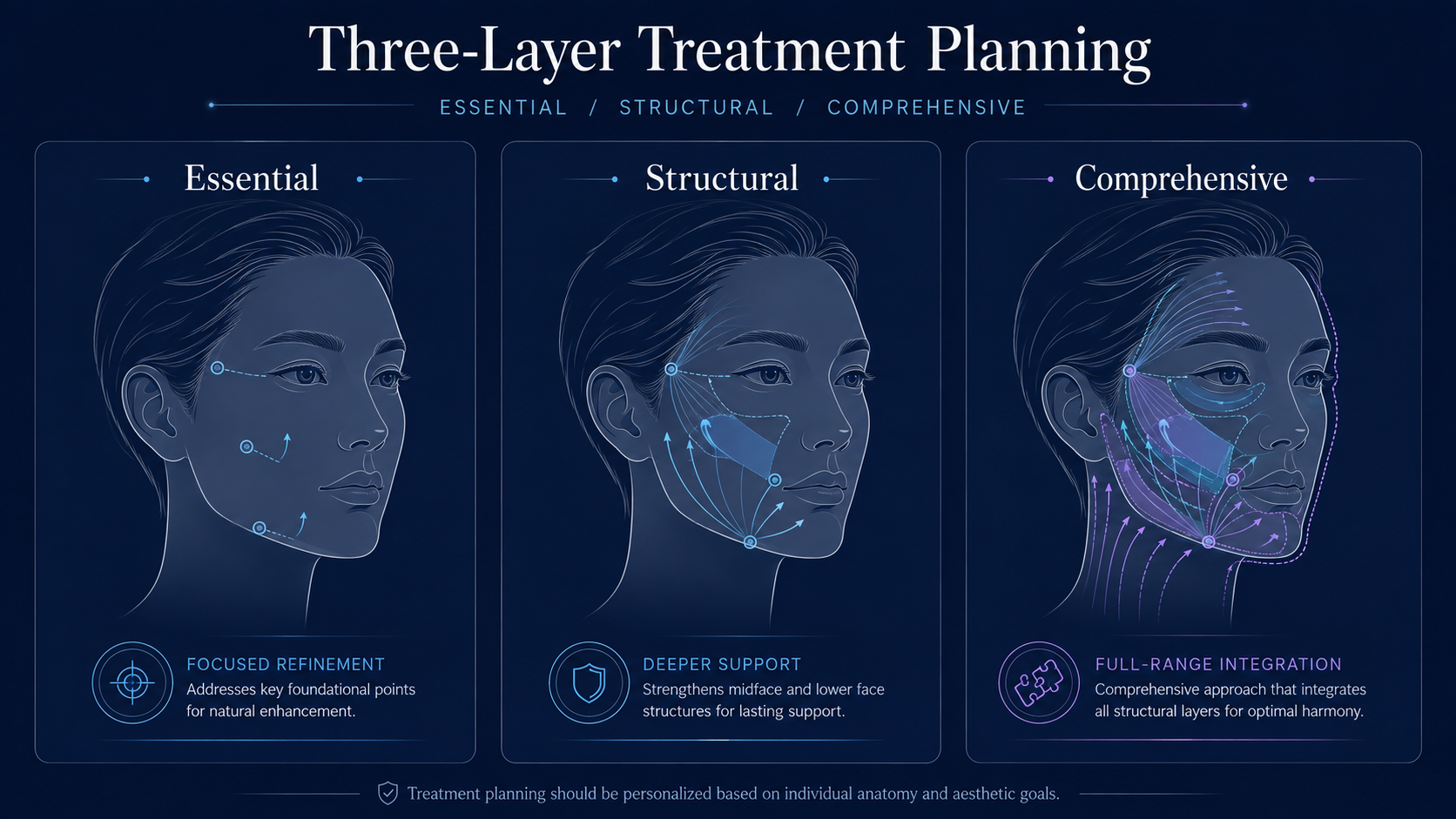
01 · Essential
Discuss focused options for mild laxity or early changes in facial contour.
02 · Structural
Considers support in the midface and lower face, and whether SMAS lifting is appropriate.
03 · Comprehensive
Discuss whether a combination of techniques is appropriate for changes across more than one facial area.
Treatment planning should be personalized based on individual anatomy and aesthetic goals. The final plan is confirmed only after in-person examination and medical assessment.
The triple-layer technique
Depending on your assessment, Dr. Ye may discuss one or more techniques. Ask what each would address and what alternatives are available.
Layer 01
A technique that removes selected areas of facial fat. Ask which areas the surgeon would treat and where the incisions would be placed.
Layer 02
The clinic’s term for a radiofrequency microneedling technique. Ask whether it would be part of your plan and discuss its risks and expected recovery.
Layer 03
SMAS refers to a layer of tissue beneath the skin. The surgeon can explain how it may be addressed in your plan.
Recovery and follow-up
Your surgeon can explain what to expect after the proposed procedure and when you’ll need follow-up.
Early recovery
Swelling and bruising can occur after surgery. Ask your surgeon about incision care and what signs to watch for.
Follow-up
Ask when to return for a check-up or stitch removal, if needed, and when to resume usual activities.
Ongoing recovery
Healing and results vary. Discuss your return to work and travel with the clinical team.
Healing varies between individuals. Discuss your own recovery plan, follow-up schedule and return date with the clinical team before booking travel or time away from work.
The experience
Assessment begins before the operating room — at rest and in expression, from front, oblique and profile views.
Dr. Ye discusses which changes concern you and which features you want to preserve, then sets those observations alongside your anatomy, medical history and recovery plans.
Start here
Share your concerns and photographs for a first-stage review, or arrange an in-person consultation in Shanghai.